Does a data leak mean anything to you?
Before we outline what you can do in the event of a data breach to protect your business, it’s important to understand what a data breach is and the associated risks. Indeed, a data breach can have disastrous consequences for a business, ranging from loss of customer trust to significant regulatory fines.
Preventive measures to put in place to protect data:
Protecting your business data from cyberattacks doesn’t have to be boring. Here are five fun and effective prevention measures you can take now to strengthen the security of your business:
- Throw away the post-its: Have you ever found yourself writing your password on a post-it stuck to your screen? We’ve all been there, but it’s a terrible safety idea. Instead, use a password manager to store all your passwords securely.
- Encrypt your data: You may have heard of end-to-end encryption, which is used by apps like WhatsApp to protect conversations. You can also use encryption to protect your sensitive data, including emails, documents, and files stored on hard drives.
- Stay up to date: Security updates are annoying, but they’re also essential to keeping your business secure. Make sure all your software and systems are up to date with the latest security patches.
- Educate your employees: Your employees are your first line of defense against cyberattacks. Make sure they know about cybersecurity risks and best practices, such as checking suspicious emails and protecting their personal devices.
- Use security tools: Security tools like firewalls, antivirus, and antimalware can help you detect and block cybersecurity threats before they cause damage.
By taking these steps, you can turn protecting your company’s data into a fun and effective activity.
Steps to take in the event of a data leak:
Discover the essential steps to detect, minimize impacts, communicate with your customers and regain their trust.
- Use monitoring tools to quickly detect a data leak. Perform regular security scans to identify risks.
- Respond quickly by isolating the source of the leak, collecting and analyzing data, notifying the relevant authorities and affected customers, and implementing corrective measures.
- Communicate quickly and clearly with affected customers and partners, provide them with advice on the steps they can take to protect themselves, and offer them support.
- Communicate openly and honestly about the causes of the leak, the steps taken to correct it, and the additional safety measures put in place to prevent further leaks. Provide support and help your customers protect their personal data.
In this article, we’ve reviewed the main cybersecurity risks SMBs face and the essential steps you can take to prevent them.
You too can take part in the collective responsibility for cybersecurity by protecting your data and that of your customers. We are here to help you strengthen your IT security and maintain a safer and more secure online environment. Contact us now to find out more.
]]>What is digital transformation and why are businesses adopting it?
Imagine you are in a store a few years ago. You buy your products, pay with cash or credit card, and go home. Today the situation is different. You can buy your products online, pay with your phone and have them delivered directly to your home. This development is what we call digital transformation. Businesses are adopting it for several reasons. First of all, digital transformation helps improve productivity and process efficiency. It also makes it possible to offer new products and services, to better understand customer needs and to differentiate yourself from the competition. But be careful, digital transformation also brings its share of cybersecurity risks. Indeed, new technologies open the door to new forms of cyberattacks. Businesses that do not take the necessary steps to protect their data and systems are at risk of hacking, data theft, sabotage or other forms of cybercrime.
Security risks linked to digital transformation:
Digital transformation offers many benefits to businesses, but it also brings its share of cybersecurity risks. Businesses need to be aware of these risks to be able to prevent and manage them effectively. Some of these risks include: Phishing attacks: Cybercriminals use sophisticated techniques to deceive employees into sensitive information, such as passwords, credit card numbers or personal information. Ransomware attacks: Ransomware attacks aim to encrypt company files to render them unusable, and then demand a ransom to get them back. Security vulnerabilities in connected objects: Connected objects such as surveillance cameras, smart thermostats or home automation devices can be hacked and used to access the company network. Data leaks: Businesses must protect sensitive data, such as customer personal information, trade secrets and financial data, to avoid leaks that could compromise their reputation and trust.
Cybersecurity best practices for companies that are going digital:
Want to know how businesses can protect themselves against cyberthreats in the ever-changing digital world? Here are some helpful tips to help keep your business safe:
- Stay up to date: Make sure you keep all your software and applications up to date to protect against known vulnerabilities. This may include security updates, bug fixes and software upgrades.
- Use strong passwords: Avoid using common or easy-to-guess passwords, such as names, dates of birth, or dictionary words.
- Educate your employees: Provide your employees with regular training on cybersecurity practices, the most common threats and how to avoid them. Employees can often be the weak link in your company’s security, so educate them on how to recognize the signs of a cyberattack.
- Protect your data: By using backup and disaster recovery solutions. Make sure you have security systems such as firewalls and antiviruses in place to protect your data from attacks.
- Monitor your environment: Regularly monitor your network and systems for signs of malicious activity. Use monitoring tools to detect suspicious activity and control access to sensitive data.
Cybersecurity is essential in the digital transformation of businesses. Potential risks such as phishing attacks, ransomware attacks and IoT security breaches must be considered. Businesses should put security measures in place to protect their data and systems, following good cybersecurity practices such as regularly updating software, using strong passwords, raising employee awareness and network and systems monitoring. By taking a proactive approach to security, businesses can minimize risks and protect their digital assets. Don’t wait until you’re the victim of a cyberattack, protect your business now. Book a free audit with our cybersecurity experts today to assess your security posture and get personalized recommendations to strengthen your protection against digital threats.
]]>In the current context of the company, a critical situation was emerging. Their digital presence, embodied by their website, was vulnerable, exposing crucial data to the dangers of cyberspace. This online vulnerability was just one aspect of a broader issue. Internally, employees faced a major obstacle: the inability to work remotely, a limitation inherited from a bygone era, hindering their flexibility and responsiveness, particularly during crises that required immediate adaptability.
The company’s existing infrastructure, now outdated, constituted a burden. Aging equipment and high maintenance costs deeply carved into their resources, underscoring the imperative need for evolution. Concurrently, the absence of a robust backup plan loomed as a threat, representing a critical shortfall in their operational security.
Moreover, their valuable hardware and equipment, essential to their operations, were negligently monitored, a risk they could no longer afford to ignore. The need for change was palpable, dictated by the urgency to protect their hard-earned assets.
This realization marked the beginning of a journey towards digital transformation, acknowledging that to thrive in a constantly changing world, it was imperative to strengthen their digital security and adopt a flexible and innovative approach. They thus embarked on redefining their technological future, a bold step towards a safer and more dynamic future.
Projects and Achievements
- Technological Analysis: Our team conducted a thorough evaluation of the company’s technological structures, ensuring that their infrastructure and IT strategies were aligned with their current and future needs.
- Strengthening Information Security: With our cybersecurity expertise, we conducted a detailed analysis to detect and correct vulnerabilities, thus strengthening the protection of information and systems against emerging threats.
- Advanced Surveillance System: We installed a modern surveillance system, integrating cutting-edge technologies for effective and discreet monitoring.
- Development of a Recovery Plan: We developed robust recovery strategies to ensure operational continuity in the event of a major incident.
- Implementation of a Secure Remote Work System: We implemented remote work solutions, ensuring data security and smooth communication for distributed teams.
- Compliance with Law 25: As regulatory compliance experts, we guided the company through the complex process of complying with Law 25, ensuring personal data protection.
- Optimization of Cloud Infrastructure: We enhanced the efficiency of the company’s cloud operations, optimizing costs and improving performance.
- Password Management: We implemented password management solutions, enhancing security while simplifying access for users.
- Optimization of Internal Processes: Our expertise in process analysis enabled us to identify and implement significant improvements in the company’s internal operations, increasing their efficiency and reducing costs.
Conclusion
Faced with major technological challenges, the company not only survived but also thrived, turning each obstacle into an opportunity for growth and innovation. Their journey towards digital transformation represented a proactive approach to operational excellence and information security.
Through a series of strategic initiatives – from consolidating their information security to modernizing their cloud infrastructure, implementing a secure remote work system, and establishing a solid recovery plan – the company not only secured its operations against current threats but also paved the way for new possibilities. The optimization of internal processes and the installation of a sophisticated surveillance system are eloquent examples of their commitment to continuous innovation.
This journey towards transformation bolstered their confidence in their ability to navigate a rapidly evolving technological landscape, while remaining true to their core values. By ensuring compliance with Law 25 and implementing effective password management, the company demonstrated its commitment to personal data protection and the security of its digital environment.
Today, the company stands not only as a secure and resilient entity but also as agile and prepared for the future. Their story is a testament to the importance of adaptability and innovation in a constantly evolving world. They continue to move forward, ready to meet future challenges, equipped with cutting-edge technology and a team dedicated to the pursuit of excellence. Their transformation transcends the realization of successful projects; it symbolizes a continuous evolution towards a better and safer future for all.
]]>Law 25 on the protection of personal information in Quebec will officially come into effect. Adopted in 2021, this law modernizes the legal framework for the protection of personal data, drawing direct inspiration from the General Data Protection Regulation (GDPR) in Europe. Law 25 was introduced to strengthen citizens’ privacy rights and hold companies accountable for the management and security of personal information. It applies to all businesses in Quebec, regardless of their size or industry. The deadline of September 22, 2024, marks the final phase of the implementation of this law, with a particular focus on data portability.
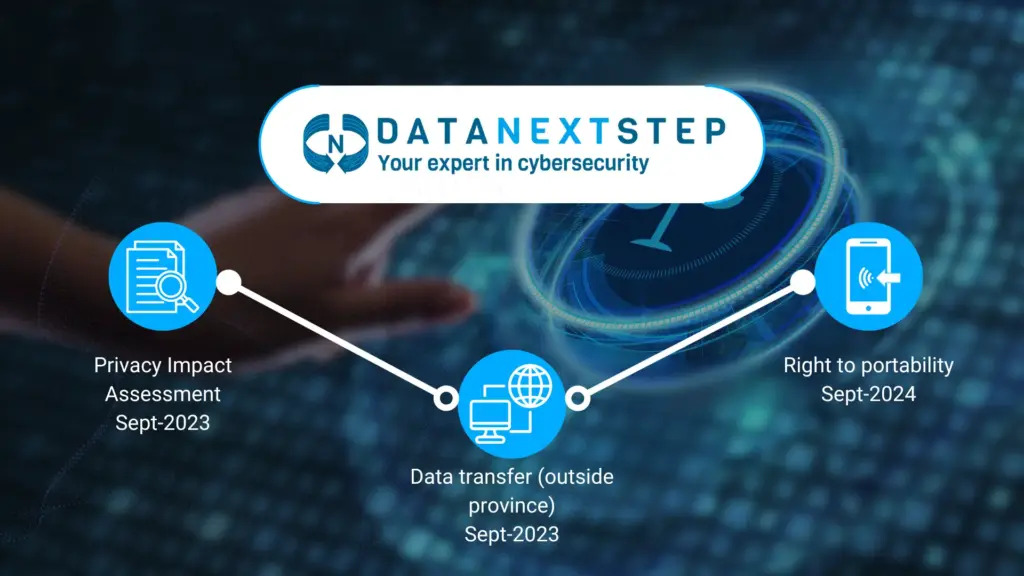
Companies must now prepare for these new legal obligations, which include enabling clients, partners, and other stakeholders to retrieve their personal data in a structured, commonly used, and secure format. Complying with this law is essential not only to respect your clients’ rights but also to protect your business from cyber risks and potential legal sanctions.
Why data portability is important
Data portability is a crucial aspect of privacy protection. It allows users to retrieve their personal information and easily transfer it to another service. This offers greater transparency and improves trust between companies and their clients. In sectors like telecommunications, financial services, or technology, this transparency becomes a key differentiator for businesses in Quebec.
Examples of companies already implementing data portability:
Google: Through its data retrieval service, Google allows users to retrieve and transfer their information between different services, such as Gmail or Google Photos, making it easier to manage personal data.
Facebook: Facebook also allows its users to download all their personal information, which enhances user trust while giving them more control over their own data.
Canadian Banks: Some banks in Canada allow their clients to transfer their banking data to other financial institutions, enhancing flexibility and ease of use for customers.
How to achieve this:
Step 1: Conduct a data inventory
One of the first steps to comply with Law 25 is to perform a complete inventory of the personal information you collect and store. This includes data from your clients, partners, and employees. This step allows you to assess the quantity and sensitivity of the information you need to protect and better understand the measures required to ensure data security.
Step 2: Evaluate your technological systems
Do your current systems allow for the transfer of personal information in an easy-to-use format? If not, it’s time to upgrade your tools to enable data portability in compliance with Law 25. This could include simple solutions like data files that your clients can use with other services.
Step 3: Establish processes for data portability requests
Create clear and accessible processes to enable your clients and partners to request the retrieval of their personal information. This could include a secure online form or a simple procedure to follow. Ensure that each request is handled quickly and efficiently to guarantee personal information protection that meets expectations.
Step 4: Secure data transmission
Ensure that personal information is transmitted securely to avoid any risk of interception or unauthorized use. This prevents risks related to data breaches or cyberattacks. This could include using secure transfer methods to ensure that sensitive information is not compromised.
Bonus: Data portability as a resilience and business continuity asset
By making your data more easily transferable, you allow your company to become more resilient in the face of changes. For example, if you need to switch suppliers or technological infrastructure, data portability allows for a smooth transfer of information to a new system. This helps you avoid excessive dependence on a single supplier, a situation known as vendor lock-in, which can make migration to other solutions costly and difficult.
Moreover, portability facilitates business continuity in times of crisis, allowing you to maintain your operations without interruption (example: Crowdstrike). By making your data more flexible, you improve your company’s ability to adapt to different environments without compromising security or losing efficiency.
Conclusion: Get ready now
September 22, 2024, is fast approaching. Preparing for this deadline and complying with the law on the protection of personal information is not just a legal obligation; it is also an effective way to strengthen your company’s security and protect your business relationships. By adapting now, you ensure the continuity of your operations while protecting your sensitive data.
Need Help?
Contact us for a free, personalized consultation. Our experts will guide you through every step to ensure your company’s compliance before the September 22, 2024, deadline: https://dev.dns.mtlti.com/fr/priserdv
Reference:
https://www.espaceobnl.ca/fr/contenus/l-essentiel-de-la-loi-25-comprendre-et-agir-en-obnl
https://www.espaceobnl.ca/fr/contenus/l-essentiel-de-la-loi-25-comprendre-et-agir-en-obnl
https://cai.gouv.qc.ca/uploads/pdfs/CAI_FIC_Pieces_ID_Entreprises.pdf?gt=l%E2%80%99entreprise
]]>Best Practices for IT Security Audits in Canadian Businesses
Implementing effective IT security audit practices is crucial for Canadian businesses to protect sensitive data, comply with regulatory requirements, and mitigate risks. This involves regular assessments, updated protocols, employee training, and incident response planning.
What is an IT Security Audit?
An IT security audit is a crucial step for any company looking to protect its sensitive data and ensure a robust digital infrastructure. This systematic process allows for the assessment of potential vulnerabilities, detection of security breaches, and identification of gaps in existing security policies. A comprehensive audit not only examines computer systems and networks, but also the procedures and operational practices that influence overall security.
What is the Purpose of an IT Security Audit?
Furthermore, the IT security audit helps assess compliance with current standards and regulations, such as the General Data Protection Regulation (GDPR) or the ISO/IEC 27001 standard or Quebec Law 25, thus ensuring that the company does not face legal risks. This thorough evaluation also helps to identify risks before they become serious threats, allowing the company to implement proactive corrective measures. Useful resources for small businesses seeking compliance with cybersecurity standards can be found here: Cybersecurity Resources for Small and Medium Enterprises
The Importance of Conducting an IT Security Audit for Canadian Businesses
The significance of this audit lies in its ability to provide a clear overview of the current state of the company’s IT security. It allows for the prioritization of corrective actions, optimization of cybersecurity resources, and continuous improvement of defence strategies. Ultimately, a well-conducted security audit not only helps protect sensitive information but also preserves the reputation and trust of clients, two essential elements for the longevity of any organization in an increasingly complex and threatening digital environment.
In-Depth Analysis of Your IT Systems
Our IT security audit approach starts with a thorough analysis of all critical aspects of your network and systems. Also, read our article about the Steps of an audit.
We begin with a detailed assessment of existing security protocols, scrutinizing firewall configurations, data encryption settings, and intrusion detection mechanisms. Each element is examined to ensure compliance with the best security practices and to identify potential vulnerabilities that could be exploited by attackers.
https://www.ovhcloud.com/en-ca/learn/what-is-encryption
We also conduct a detailed IT security audit of access management policies, analyzing user access rights, multifactor authentication processes, and access controls to sensitive resources. This review allows us to identify potential configuration errors or gaps in access controls, ensuring that only authorized individuals have access to critical information.
This comprehensive evaluation enables us to detect potential weaknesses in your infrastructure and develop precise, tailored recommendations to strengthen your cybersecurity. Our suggestions include corrective measures such as improving firewall configurations, enhancing security policies, and implementing advanced technological solutions to effectively protect your data and systems from emerging threats.
IT Risk Assessment
The IT risk assessment is at the core of our audit method. We identify and classify potential threats, considering their likelihood of occurrence and their impact on your business. This proactive approach allows us to prioritize necessary security measures and provide you with a clear action plan to minimize risks.
Additionally, we develop incident scenarios to test the resilience of your systems and prepare suitable response strategies. This approach ensures that your company is not only protected against current threats but also prepared to address future vulnerabilities effectively.
Contact us today to learn more about our IT security audit service and discover how we can strengthen your company’s defence against cyber threats.
At Data Next Step, we understand the critical importance of IT security in a constantly evolving digital environment. Our team of experts is dedicated to providing you with precise and pragmatic recommendations to protect your digital assets and ensure the continuity of your operation.
]]>This event provides an ideal platform for discussing the challenges related to Internet security, particularly in an era where cyber threats, such as the 46% increase in Distributed Denial of Service (DDoS) attacks reported in the latest NETSCOUT report, pose major risks to the security of our online information.
On this Safer Internet Day, it’s essential to acknowledge the growing importance of cybersecurity in the face of digital threats, especially DDoS attacks. These attacks, which aim to make an online resource unavailable by overwhelming it with traffic, highlight the need for secure and resilient digital infrastructures. Our recent research revealed that nearly 7.9 million DDoS attacks were recorded globally in the first half of 2023, averaging about 44,000 attacks per day.
In this context, real-time network visibility becomes a critical element of organizations’ cybersecurity strategies. A detailed and comprehensive view of network traffic is indeed indispensable, not only for quickly identifying and countering potential threats such as DDoS attacks but also for ensuring efficient data management and the continuity of online activities. Real-time data flow monitoring is fundamental for detecting anomalies, preventing information loss, addressing latencies and bottlenecks, reducing the risk of data leaks, and responding effectively to security incidents. Anticipation is key, as General Sun Tzu reminds us in his “Art of War”: “The one who excels at resolving difficulties does so before they arise. The one who excels at defeating his enemies triumphs before the threats of these materialize.”
Today, more than ever, it’s vital for individuals, businesses, and institutions to understand the risks associated with online data security and to actively engage in implementing robust data protection practices. This involves educating people on good cybersecurity practices, investing in advanced network monitoring solutions, and cooperating to strengthen security standards. Together, businesses and security specialists can and must work towards creating a safer and more resilient digital environment for all. In this spirit, the approach of the Ministry of Education to extend its initiatives until March reinforces the idea that Rome, like good security practices, wasn’t built in a day.
]]>Tip #1: Assessing Risks and Needs
The journey to secure remote working begins with a thorough assessment of your company’s security risks and needs. It’s important to identify the sensitive information that remote employees need to access and understand the potential risks involved. Consider the different types of users within your organization and develop access policies based on the least privilege principle. This means that employees have access only to the information necessary for their roles, reducing the risk of data compromise.
Tip #2: Embracing Strong Authentication
In the world of remote work, the importance of strong or multi-factor authentication (MFA) can’t be overstated. Go beyond traditional passwords and incorporate a second layer of security, such as fingerprint scanning or a notification sent to a mobile device. This extra step is a game-changer in preventing unauthorized access, especially if user credentials are compromised.
Tip #3: The VPN Lifeline
Remote employees often connect to company resources over various networks, which aren’t always secure. Here’s where Virtual Private Networks (VPNs) become invaluable. By creating an encrypted connection between an employee’s device and company resources, a VPN ensures that sensitive data remains confidential. It’s essential to implement strict guidelines for VPN use to make sure all access is both secure and monitored.
Tip #4: Strong Identity and Access Management (IAM)
In remote work setups, managing who has access to what is crucial. Implementing a solid IAM system helps centrally manage access rights and employee authentication. This system should be able to automate granting and revoking access based on an individual’s role and responsibilities in the company. It’s also critical to quickly deactivate the accounts of employees who leave the company to prevent any unauthorized access in the future.
Tip #5: Cultivating Security Awareness and Continuous Learning
Creating a culture of security awareness is just as important as any technical measure. Regularly educate your team about the best security practices, the risks they might face, and what to do in case of a security breach. Encourage them to be extra cautious with emails to avoid falling victim to phishing scams. Make sure they have the necessary resources to report suspicious activities. Additionally, remind them of the importance of physical security, especially if they work in public spaces like cafes or coworking areas. Simple actions like locking their screen when stepping away can make a big difference.
In conclusion, securing your remote work environment requires a proactive and comprehensive approach to managing access and educating your team. By following these five essential steps, companies and their remote employees can significantly enhance their security, safeguard their data, and ensure smooth and secure operations in the remote work era.
]]>